Preface
This note explores the spiritual depth of Deuteronomy 24:1-4, moving beyond its surface-level instructions on divorce to reveal a profound narrative of covenant, redemption, and transformation. By examining the Hebrew terms and their spiritual significance, it connects the physical act of divorce to Yahuah’s relationship with YasharEL, portraying Yahusha as the ultimate husband who fulfills Torah through an oath-bound act of divorce and remarriage. The text underscores the transition from carnal to spiritual, illustrating how Yahuah’s covenant with His people is renewed through Yahusha, who bears the crookedness of His bride to reconcile her to Himself.
Deut 24:1 When a man takes a wife and marries her,
and it happens that she finds no favor in his eyes because he has found some unseemly thing in her,
and he writes her a certificate of divorce/kariyathuth 𐤊𐤓𐤉𐤕𐤅𐤕 H3748 and puts it in her hand and sends her out from his house,
Deut 24:2 and she goes forth from his house and goes and becomes another man’s wife,
Deut 24:3 and the latter husband hates her and writes her a certificate of divorce/kariyathuth 𐤊𐤓𐤉𐤕𐤅𐤕 H3748 and puts it
in her hand and sends her out of his house, or if the latter husband dies who took her to him as his wife,
Deut 24:4 then her former husband who sent her away may not take her again to be his wife,
after which she has been defiled; for that is an abomination before Yahuah,
and you shall not bring sin on the land which Yahuah your El gives you as an inheritance.
When we read Torah on the surface we see an instruction which seems to be a way out of marriage in appeasing the flesh in getting another wife but those who have been spiritually awakened understand that the Torah of life is hidden in the letter and the letter kills but the Ruach gives life. The Yahudi's understood Torah after the flesh and that's why it was to them Torah of khatah (sin) and muth (death).
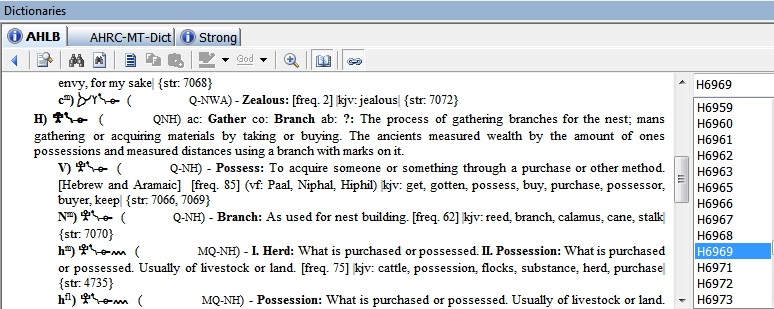
Certificate/scroll/record/count: saphar 𐤎𐤐𐤓 H5612 A document or record written on a sheet of skin or papyrus and rolled up. Also means scribe, tell, declare, number, count, show, writer, speak, account, commune, reckon, talk| {str: 5608}
Divorcement or Divorce: kariyathuth 𐤊𐤓𐤉𐤕𐤅𐤕 H3748 As cut off from the husband. A cutting off or down of anything. Often used as a cutting of the covenant in the sense that the sacrificial animal is cut in half (see Jeremiah 34:18).
Jer 34:17 “Therefore thus said יהוה, ‘You have not obeyed Me in proclaiming release, each one to his brother and each one to his neighbour. See, I am proclaiming release to you,’ declares יהוה, ‘to the sword, to the pestilence, and to the scarcity of food! And I shall make you a horror to all reigns of the earth.
Jer 34:18 And I shall give the men who are transgressing My covenant, who have not established the words of the covenant which they made before Me, when they cut/karath 𐤊𐤓𐤕 H3772 the calf in two and passed between the parts of it:
Abraham cutting animals into two parts:
Gen 15:17 And it came to be, when the sun went down and it was dark, that see, a smoking oven and a burning torch passing between those pieces.
Gen 15:18 In that/hua 𐤄𐤅𐤀 H1931 Day יהוה cut out/karath 𐤊𐤓𐤕 H3772 a covenant with Aḇram, saying, “I have given this land to your seed, from the river of Mitsrayim to the great river, the River Euphrates,
When Yahuah made a covenant with Abraham, He passed through the animal pieces that Abraham cut of the animals as a smoking oven and a burning torch between those pieces.
hua 𐤄𐤅𐤀 H1931: A looking toward another. Also translated as that, him, same, this, he, which, who, such, wherein, be, it, one| {str: 1931, 1932}
Yahuah was looking towards 'that day' referring to Renewed Yerushalayim, when He would cut out a covenant with Abraham in giving the Promised land to His seed. Stephen in his testimony says Yahuah didn't give Abraham even a foot of the Promised land. Hebrews 11:9-10 tells us that Abraham looked at the promise as futuristic in Renewed Yerushalayim i.e. a city whose builder and maker is Elohim and hence, he sojourned the promised land as a stranger dwelling in tents with Yitshaq and Yaaqob, the heirs of the same promise.
Act 7:3 and said to him, ‘Come out of your land and from your relatives, and come here, into a land that I shall show you.’
Act 7:4 “Then he came out of the land of the Kasdim and dwelt in Ḥaran. And from there, after the death of his father, He removed him to this land in which you now dwell.
Act 7:5 “And He gave him no inheritance in it, not a foot of it. But He promised to give it to him for a possession, and to his seed after him,when as yet he had no child.
Heb 11:8 By belief, Aḇraham obeyed when he was called to go out to the place which he was about to receive as an inheritance. And he went out, not knowing where he was going.
Heb 11:9 By belief, he sojourned in the land of promise as a stranger, dwelling in tents with Yitsḥaq and Ya‛aqoḇ, the heirs with him of the same promise.
Heb 11:10 for he was looking for the city having foundations, whose builder and maker is Elohim
The smoking oven and flaming torch between the pieces was done by Yahuah Himself, showing He will cut out the covenant in Himself on the Day. Yahusha said "Abraham saw My DAY and rejoiced"
Joh 8:56 “Your father Aḇraham was glad that he should see My day, and he saw it and did rejoice.”
When we read YarmeYahu (Jeremiah) 34:8-11 & 17-20, we read that the Yahudites didn't proclaim release (as in a Shemitah) to their brother or neighbor. There is no mention of anywhere in Torah or elsewhere that YasharEL or Yahudah cut out animals and passed through them to make a covenant. The only instance is of Abraham which they may have replicated to make a covenant with Yahuah and the people in proclaiming release to their brethren i.e. obeying the Shemitah laws.
Jer 34:8 The word which came to Yirmeyahu from יהוה, after Sovereign Tsiḏqiyahu had made a covenant with all the people who were at Yerushalayim to proclaim release to them:
Jer 34:9 that everyone was to set free his male and female slave, the Hebrew man and the Hebrew woman, no one was to keep a Yehuḏi, his brother, enslaved.
Jer 34:10 And when all the heads and all the people who had come into the covenant heard that each one was to set free his male and female slaves, and not keep them enslaved any longer, they obeyed and released them.
Jer 34:11 But afterward they changed their minds and made the male and female slaves return, whom they had set free, and brought them into subjection as male and female slaves.
Jer 34:17 “Therefore thus said יהוה, ‘You have not obeyed Me in proclaiming release, each one to his brother and each one to his neighbour. See, I am proclaiming release to you,’ declares יהוה, ‘to the sword, to the pestilence, and to the scarcity of food! And I shall make you a horror to all reigns of the earth.
Jer 34:18 And I shall give the men who are transgressing My covenant, who have not established the words of the covenant which they made before Me, when they cut the calf in two and passed between the parts of it:
Jer 34:19 the heads of Yehuḏah, and the heads of Yerushalayim, the eunuchs, and the priests, and all the people of the land who passed between the parts of the calf.
Jer 34:20 And I shall give them into the hand of their enemies and into the hand of those who seek their life. And their corpses shall be for food to the birds of the heavens and the beasts of the earth.
Either the covenant is cut out or cut off and for both the same word 'karath 𐤊𐤓𐤕 ' is used.
Gen 17:14 “And an uncircumcised male child, who is not circumcised in the flesh of his foreskin, his life shall be 'cut off/karath 𐤊𐤓𐤕 H3772' from his people – he has broken My covenant.”
Shaul the emissary reasoned that circumcision profits if one obeys Torah, but if one is a transgressor of Torah, his circumcision has become uncircumcision. Remember, circumcision was also a 'cut out covenant' and if not kept would result in being cut off and 'karath' is used in both 'coming in' and 'going out' of a covenant. Once cut off, that person cannot come in again into the same covenant.
Rom 2:25 For circumcision indeed profits if you practice the Torah, but if you are a transgressor of the Torah, your circumcision has become uncircumcision.
Rom 2:26 So, if an uncircumcised one watches over the righteousnesses of the Torah, shall not his uncircumcision be reckoned as circumcision?
The uncircumcision becomes circumcision if one watches over the righteousnesses of the Torah. Not that he would live in an uncircumcised state, Shaul the emissary gave Abraham as an example of watching over the righteousnesses of the Torah while he was still uncircumcised in the flesh, the seal of righteousness came to him later confirming his circumcision of his heart. Gen 15 instance of Yahuah passing through the animal pieces in cutting out a covenant with Abraham and his seed was when Abraham was uncircumcised in the flesh and had no son yet. The cut out covenant came to him as stated in Gen 17 when he was named as Abraham from Aḇram.
Similarly when a certificate of divorce was given which is a cut off covenant, the wife who would marry another man had no option ever to return to her first husband. Deut 24;4
When Yahusha was confronted with a quote from this text this is what he said
Matt 19:3 Some Pharisees came to Him, testing Him
and asking, Is it lawful for a man to divorce his wife for any reason at all?
Matt 19:4 And He answered and said, “Have you not read that He who created them from the beginning
made them male and female,”
Matt 19:5 and said, “For this reason a man shall leave his father and mother
and be joined to his wife, and the two shall become one flesh?”
Matt 19:6 “So they are no longer two, but one flesh.
What therefore the Elohim has joined together, let no man separate.”
Matt 19:7 They said to Him, Why then did Moshe command to give her a certificate of divorce
and send her away?
Matt 19:8 He said to them, “Because of your hardness of heart Moshe permitted you to divorce your
wives; but from the beginning it has not been this way.”
Matt 19:9 “And I say to you, whoever divorces his wife, except for harlotry,
and marries another woman commits adultery
(and marries her which is divorced does commit adultery).”
Matt 19:10 The disciples said to Him, If the relationship of the man with his wife is like this,
it is better not to marry.
Matt 19:11 But He said to them, “Not all men can accept this statement,
but only to whom it is given in an oath/𐤀𐤋𐤄 ܐܶܠܳܐ ”
Hebrew & Khabouris (Aramaic ܐܶܠܳܐ) translation uses 'Elah 𐤀𐤋𐤄' which means 'oath howl, lament aloud, wail' The essence of what is being said here is lost in the Greek to English translation which only says
Mat 19:11 And He said to them, “Not all receive this word, but only those to whom it has been given,
If we read what Mashiyach said on a surface level we see a higher standard in morality as compared to the Torah of khatah and muth but there is a deeper spiritual meaning to what Mashiyach said which needs a little digging and spiritual verses spiritual comparison. Elah in Aramaic also is used for Elohim.
Divorce according to the Torah of life was not permitted at all for mankind and whoever understood the commandment literally were carnal but Yahusha reveals to us what divorce and re-marriage is all about. It was a command only to him who was put under an oath (elah)-see Matthew 19:11 i.e. Only he reserved the right to divorce because only he is perfect and never ever sinned or never became unfaithful to his bride.
Scripture uses two words which define a perspective-one from YasharEL point of view and one from Yahuah's
The two words for husband are 'baal' and 'ishi'
Jer 31:32 not according to the covenant which I made with their fathers in the day
I took them by the hand to bring them out of the land of Egypt, My covenant
which they broke, although I was a husband (baal) to them, declares Yahuah.
Isa 54:5 For your husband (baal 𐤁𐤏𐤋 H1166) is your Maker, whose name is Yahuah of hosts;
and your Redeemer is the Set-Apart One of YasharEL, who is called the EL of all the earth.
YasharEL after the flesh likened Yahuah as the lords/masters/husbands on earth and that was their perspective but Yahuah says they will no longer call him 'baali' for he will remove the name of baals from their mouth and they will call him 'ISHI'.
Hos 2:16 And it shall be in that day, declares Yahuah,
that you shall call Me Ishi /𐤀𐤉𐤔𐤉 H376 and shall no longer call Me Baali 𐤁𐤏𐤋𐤉 H1180.
Hos2:17 For I shall remove the names of the Baalim 𐤁𐤏𐤋𐤉𐤌 H1168 from her mouth,
so that they shall be mentioned by their names no more.


Ishi (spelled as ayshay 𐤀𐤉𐤔𐤉) has a root word 'Ash 𐤀𐤔' which means 'Fire'. It's no wonder that Masha (Moses) saw the bush burning with fire and yet was not consumed.
Ex 3:2 The angel of Yahuah appeared to him in a blazing fire (ash 𐤀𐤔 ) from the midst of a bush; and he looked,
and behold, the bush was burning with fire, yet the bush was not consumed.
Hos 2:19 I shall betroth (arashat 𐤀𐤓𐤔𐤕 H781) you to Me forever;
Yes, I shall betroth (arash 𐤀𐤓𐤔 H781) you to Me in righteousness and in justice, in lovingkindness and in compassion,

arash/arashat means 'to request/betroth'
2 Cor11:2 For I am jealous for you with a jealousy of Elohim;
for I betrothed you to one husband (ishi 𐤀𐤉𐤔), so that to the Mashiyach I might present you as a pure virgin.
Shaul the emissary said he betrothed the assembly to ONE HUSBAND and that is Mashiyach. So we must look at the Mashiyach because it was he who fulfilled the Torah and bound himself with the oath of divorce and re-marriage.
Mal 3:17 They shall be to Me, says Yahuah of hosts, on the day that I prepare My treasure, and I shall spare them as a husband (ish 𐤀𐤉𐤔 H376) has pity on his own son (ban) who serves him.
Yahuah was both Father and Ish / 𐤀𐤉𐤔 to Yasharal and we can see this in Malachi 3:17 where he says that he would spare his own as a husband has pity on his own son who serves him. This doesn't make sense to the carnal mind and that's why the translators translated ísh' here as 'man'
But when we understand both the Fatherhood and the Husband relationship of Yahuah to YasharEL it makes perfect sense. Yahuah placed the relationship of the husband above his fatherhood because through this relationship he would be one flesh with YasharEL reconciling them all back to his Fatherhood. I know this may not make sense yet so hold on.
Gen 2:24 Therefore an aysh 𐤀𐤉𐤔 H376 (husband) shall leave his father (abh) and his mother (am),
and be joined to his wife (ashah 𐤀𐤔𐤄 H802); and they shall become into one flesh (basar).
Husband- aysh 𐤀𐤉𐤔 has root word 'ash 𐤀𐤔' which means 'fire'
Wife-ashah 𐤀𐤔𐤄 has root word 'ash 𐤀𐤔' in it which also means 'fire'
And the two will become one flesh. Is it a coincidence that 'ashah 𐤀𐤔𐤄 ' means 'fire offering'?
Ex 29:25 You shall take them from their hands, and offer them up in smoke on the altar
on the burnt offering for a soothing aroma before Yahuah; it is a fire offering (ashah 𐤀𐤔𐤄 H801) to Yahuah.
Eph 5:29 for no one ever hated his own flesh, but nourishes and cherishes it,
even as the Master also does the assembly,
Eph 5:30 because we are members of His body, of his flesh, and of his bones.
Eph5:31 For this reason a husband shall leave his father and mother and shall be joined to his wife,
and the two shall become one flesh.
Quoting Gen 2:24 the emissary Shaul says that we are members of the body of Mashiyach and are of his flesh and of his bones and speaks of the husband leaving his father and mother to enjoin his ashah 𐤀𐤔𐤄 to be one flesh with her.
And in this we see Yahuah who became our Mashiyach leaving his fatherhood and leaving the Heavenly Yerushalayim the mother of us all to enjoin with us to be one flesh with him to reconcile us to his Fatherhood in the fire offering made as a sweet aroma. The ashah 𐤀𐤔𐤄 (wife) is hidden in him, of his flesh and of his bones.
With this we can understand what Elohim meant when he said :
Gen 1:26 Then Elohim said, Let Us (father and husband) make man in Our image (male and female), according to Our likeness (male and female);
and let them rule over the fish of the sea and over the birds of the sky and over the cattle
and over all the earth, and over every creeping thing that creeps on the earth.
Gen 1:27 Elohim created alaph tau man in His own image, in the image (tsalam 𐤑𐤋𐤌 H6754) of Elohim He created him;
male and female He created them.
Gen 5:2 He created them male and female,
and He blessed them and called their name adam in the day when they were created.
The image of Elohim is Mashiyach who is husband and in whom is hidden the wife. The wife was taken from the man
Gen 2:21 So Yahuah Elohim caused a deep sleep to fall upon the man, and he slept;
then He took one of his ribs (tsala 𐤑𐤋𐤏 H6763) and closed up the flesh at that place.
The Abary word tsala 𐤑𐤋𐤏 means ribs which has the root word 'tsal 𐤑𐤋' which means shadow and this same word is rooted in 'tsalam 𐤑𐤋𐤏𐤌 ' which means image.
Tsal:
'Tsala' - Ribs : Tsad (𐤑) lamed (𐤋) ayin (𐤏): tsal (shadow) ayin (see)-'Shadow that can be seen'
Tsalam:

'Tsalam'- Image: Tsad (𐤑) lamed (𐤋) : tsal (shadow) Mem (deep) : 'Shadow of the deep'
The Woman is the Shadow/Reflection of the man and hence the Woman needs to have the fullness of Mashiyach likeness in her.
1Cor 11:7 For a man ought not to have his head covered, since he is the image and esteem of Elohim;
but the woman is the esteem of man
1Cor 11:8 For the man is not of the woman, but the woman of the man;
1Cor11:9 Neither was the man was created for the woman, but the woman for the man.
1Cor 11:10 Therefore the woman ought to have a symbol of authority on her head, because of the angels.
The man is not of the woman but the woman is of the man and that's why the woman needs to have the headship of her husband over her. She needs to be hidden in the man.
When we understand the deep roots and the reflection of it in a marriage it's impossible to divorce your own flesh and bones, the one whom you are one flesh with. The scripture Matthew 19:9 éxcept for harlotry'is only reserved for Yahusha because Matt 19:11 says
But He said to them, “Not all men can accept this statement, but only to whom is put under an oath (elah 𐤀𐤋𐤄)”
Man is not in a position to accept the teaching of Yahusha unless he sees what Yahusha did for us.
We read in Deuteronomy 24:1-4 when a husband puts away his wife and she marries another and her latter husband puts her away or dies she cannot return to her first husband. But see what Yahuah says to Yasharal.
Jer 3:1 He says, If a husband puts away his wife and she goes from him and belongs to another man,
Shall he still return to her? Shall not that land be completely polluted?
But you are a harlot with many lovers; Yet you turn to Me? declares Yahuah.
A carnal mind will see a contradiction because they do not understand Deut 24:1-4. This was allowed by Masha (Moses) because of the hardness of their heart but with Yahuah it was not so. Only he reserved the right to divorce and remarry and let's see how he did it and whom did he marry?
Rom 7:1 Or do you not know, brethren (for I speak to them who know the law),
that the Torah has dominion over a man as long as he lives?
Rom 7:2 For the married woman is bound by Torah to her husband while he is living;
but if her husband dies, she is released from the law of her husband.
Rom 7:3 So then, if while her husband is living she is joined to another man,
she shall be called an adulteress; but if her husband dies, she is free from the Torah so that she is not an adulteress though she is joined to another man.
Rom 7:4 Therefore, my brethren, you also were made to die to the Torah through the body of
the Mashiyach, so that you might be joined to another, to Him who was raised from the dead,
in order that we might bear fruit for Elohim.
The Ruach is showing us from YeremeYahu 3:1 and Rom 7:1-4 that Woman who was divorced by Yahuah for harlotry was bound to Torah while her husband was still living but her husband Yahusha was put to a deep sleep (just as Adam was symbolically) and she was released from the law of her husband to remarry the one who was raised from the dead. The carnal & the whore was divorced and was remarried to the spiritual. The husband who was 'baal 𐤁𐤏𐤋' to her was now 'ishi 𐤀𐤉𐤔𐤉' to her.
Col 3:3 For you have died and your life is hidden with the Mashiyach in Elohim.
The Woman taken out from Adam was naked as he was, but the Woman taken from the Ishi Mashiyach was clothed with the headship of Mashiyach.
Ge 2:25 And they were both naked, the man and his wife, and were not ashamed.
Gen 3:21 Yahuah Elohim made coats (katan) of skin (aur) for Adam and for his wife, and clothed them.
The word 'kath 𐤊𐤕' the root word in 'katanath 𐤊𐤕𐤍𐤕' means 'crushed'
katan:
Katan: kaph tau (crushed ) nun (seed)

kat:
aur: bare/naked skin
Yahuah Elohim clothed Adam and Chauah with ''crushed seed's (katan 𐤊𐤕𐤍) nakedness (aur 𐤏𐤅𐤓)' Nun (𐤍) is also the seed
Matt 27:28 They stripped Him (Yahusha) of His own garments and put a scarlet robe on Him.
John 19:23 Then the soldiers, when they had impaled Yahusha, took His outer garments and made four parts, a part to every soldier and also the tunic; now the tunic was seamless, woven from the top throughout
Yahusha took our nakedness upon himself.
1Cor 6:15 Do you not know that your bodies are members of the Mashiyach? Shall I then take away
the members of the Mashiyach and make them members of a harlot? May it never be!
1Cor 6:16 Or do you not know that the one who joins himself to a harlot is one body with her?
For He says, The two shall become one flesh.
1Cor 6:17 But the one who joins himself to the Master is ONE RUACH with Him.
YasharEL after the flesh was divorced by Yahuah because of unfaithfulness. YasharEL went into harlotry as they couldn't see the ruach in the letter but Yahuah never forsook his people, he divorced the carnal but YasharEL of Ruach was whom he re-married in a transitioned form.
2Cor 5:16 Therefore from now on we recognize no one according to the flesh; even though
we have known the Mashiyach according to the flesh, yet now we know Him in this way no longer
2Cor 5:17 Therefore if anyone is in the Mashiyach, he is a renewed creature; the old things passed away;
behold, all things are become new.
Heb 10:19 Therefore, brethren, since we have confidence into the entrance of the set-apart place
by the blood of Yahusha,
Heb 10:20 by a new and living way which He inaugurated for us through the veil, that is, His flesh,
Shaul the emissary says that from now on we recognize no one according to the flesh even though we have known Mashiyach according to the flesh. In Hebrews 10:19-20 he tells us that we have confidence to enter the set-apart place by the blood of Yahusha by a new and living way which he made for us through the veil that is, his flesh. We read in 1 Corin 6:17 that he who enjoins with the Master is ONE RUACH with him. See the harmony in scriptures. Flesh of my flesh and bone of my bones is transformed into RUACH by being in the Master. Flesh and blood cannot inherit the kingdom of the ha shamayim and that's why Yahuah shows us that we will one day be transformed into his image and likeness which is not flesh and blood but from the Ruach.
1Joh 3:2 Beloved, now we are the sons of Elohim, and it has not appeared as yet what we shall be;
but we know that when He appears, we shall be like Him, because we shall see Him just as He is.
Being one ruach with him can we enjoin ourselves to a harlot? For they who enjoin themselves to a harlot become one flesh with her for the two shall become one flesh he says 1 Corin 6:15-16
How can we who are justified by favor be perfected by the Torah of khatah and muth (sin and death)?
Gal 3:1 You foolish Galatians, who has bewitched you, that you should not obey the truth, before whose eyes Yahusha the Mashiyach has been evidently set forth, impaled among you?
Gal 3:2 This only would I learn of you:
did you receive the Spirit by the works of the Torah or by hearing with faith?
Gal 3:3 Are you so foolish? Having begun in the Spirit, are you now being perfected by the flesh?
Yahuah has handed the old pattern which is in carnal ordinances to ha shatan. And anyone looking for perfection through the carnal ordinances are enjoined to the harlot Mystery Babylon being one flesh with her whose end will be burning in the lake of fire. But those in Mashiyach are one Ruach with him who will be transformed into his image and likeness.
Heb 13:4 Marriage is honorable in all, and the marriage bed is to be undefiled;
for fornicators and adulterers Elohim shall judge.
1Cor 7:10 But to the married I command, yet not I,
but the Master, that the wife should not depart from her husband.
1Cor 7:11 (but if she departs, let her remain unmarried, or be reconciled to her husband),
and let not the husband put away his wife.
1Cor 7:12 But to the rest I say, not the Master, that if any brother has a wife who is an unbeliever,
and she consents to live with him, let him not put her away.
1Cor 7:13 And a woman who has an unbelieving husband,
and he consents to live with her, let her not leave her husband.
1Cor 7:14 For the unbelieving husband is sanctified by his wife,
and the unbelieving wife is sanctified by the husband;
for otherwise your children are unclean, but now they are set-apart.
1Cor 7:15 Yet if the unbelieving one leaves, let him leave;
the brother or the sister is not under bondage in such cases, but Elohim has called us to peace.
Many people misinterpret 1 Corin 7:15 by teaching that the brother and sister whose unbelieving husband/wife leaves they can re-marry. It doesn't say that at all. It says ' the brother or the sister is not under bondage in such cases'. The bondage is of not putting away the spouse, they can put away the spouse in such cases. If Shaul the emissary was teaching re-marriage why would Shaul say in the same chapter in verse 39
1Cor 7:39 A wife is bound by the law as long as her husband lives;
but if her husband is dead, she is free to be married to whom she wishes, only in the Master.
The spiritual commandment was only for Mashiyach who was under an oath to divorce the Yerushalayim after the flesh and re-marry Yerushalayim after the ruach & that is why the covenant is renewed and not a new one altogether, the law giver has the right to buy back the harlot who went after many lovers as his wife by renewing her and purifying her. (Jer 3:1) and that too in His wisdom He transitioned. When she is purified and comes to Yahusha, she acknowledges that He is the same husband as she recognizes His former estate.
Jer 3:1 Elohim said, “If a man puts away his wife, and she goes from him and becomes another man’s, does he return to her again? Would not that land be made greatly unclean? But you have committed whoring with many lovers. And would you return to Me?” declares יהוה.
Yahuah before sending them into captivity reiterates Torah portion quoting it and saying would you return to Me? The answer is they couldn’t, hence He changed His form into an order of bringing them back to Him to be in a position to renew the wedding vows with them. And that is Yahusha who is Yahuah Himself. When the woman is purified by His blood and washed in it, she comes to Yahusha and affirms and weeps that it is the same Yahuah who put her away and His deep deep love for her is now manifest through keeping the Torah law of a husband intact but He brought Himself under it in an oath to be slain by it as a penalty to purify her. This is the deep wisdom of Yahuah. One coming to Yahusha will acknowledge His first estate just as Thomas did when he confessed “My Yahuah and my Elohim” The former events are told to be remembered so that one realizes that He is Yahuah who declares the end/ last estate(acharyith אחרית ) from the beginning /first estate (rashayith ראשית )
Isa 46:9 “Remember/zakar 𐤆𐤊𐤓 H2142 the former/rashayith 𐤓𐤀𐤔𐤉𐤕 H7223 events of old/olam 𐤏𐤅𐤋𐤌 H5769 , for I am Ěl, and there is no one else – Elohim, and there is no one like Me,
Isa 46:10 declaring the end /c H319 from the beginning 𐤓𐤀𐤔𐤉𐤕 H7225 , and from of old that which has not yet been done, saying, ‘My counsel does stand, and all My delight I do"
zakar 𐤆𐤊𐤓 also means a memorial, the one of the family that remembers and passes down the family history through story and family name. Also the one who acts and speaks for the family. male, man, child, mankind, him, ram| {str: 1798, 2143, 2145}
olam 𐤏𐤅𐤋𐤌 also means a vanishing point from the past to the new appearance or eternity.
rashayith 𐤓𐤀𐤔𐤉𐤕 is the beginning/genesis of someone and in this case it is Yahusha who is Yahuah.
acharyith 𐤀𐤇𐤓𐤉𐤕 is the end or last estate of someone and in this case it is Yahusha who is Yahuah.
Those who only believe in a New Covenant are detached from the first estate of all things, and that's why they say things as Yahuah is no more, OT table is worm filled carcass eaten by many today, OT is history and a worm hole-the beast has been given a great mouth speaking blasphemies against the Most High. But those who understand that the covenant is renewed (Heb 8:8-11) and see that it was Yahuah Himself who went through those pieces of animals as a smoking oven and a flaming torch, sealing a cut out covenant to Abraham and his seed are the ones who acknowledge both his former as well as last estate. Its a memorial! That is why Yahusha makes the same claim as Yahuah that He is the rishon/first and acharon/last one. In YashaYahu Isa 41:4 Yahuah says “Who has performed and done it, calling the generations from the beginning? ‘I, יהוה, am the first/rishon 𐤓𐤀𐤔𐤅𐤍 H7223, and the last ones/acharonim 𐤀𐤇𐤓𐤅𐤍𐤉𐤌 H314 (plural) I am He.’ ”
Yahusha calls himself as the beginning of the creation of Elohim where Rev 3:14 uses the Hebrew וְרֵאשִׁית (rashayath) ) בְּרִיאַת (covenanted creation ).
Rev 3:14 “And to the messenger of the assembly in Laodikeia write, ‘The Aměn, the Trustworthy and True Witness, the first estate of the covenanted creation of Elohim
Gen 1:1 In the beginning is the same word for beginning (ראשית) which is rashayath which is Elohim created the first estate of the heavens and the earth and the order shows spiritual and covenanted.
Gen 1:1 In the beginning Elohim created the heavens and the earth.
The next verse shows the earth i.e. Referring to the physical was tahu and bahu translated as formless and void where tahu and bahu shows a need to be filled.
Gen1:2 And the earth was without form/thahu תהן and void/bahu בהן , and darkness was over the surface of the deep, and the Spirit of Elohim was paving the way/rachapath רחפת over the surface of the waters.
He was foreordained to fill the emptiness of covenanted creation while the physical earth and heavens in birth pangs stood as type of the first estate of covenanted creation.
The arrival was simultaneous because everything remained concealed in the womb in birth pangs until He rose from the dead and the womb redeemed. Even the angels saw their Elohim bodily in His both estates when He rose from the dead and was glorified.
1Ti 3:16 And, beyond all question, the secret of reverence is great – who was revealed in the flesh, declared right in Spirit, was seen by messengers, was proclaimed among nations, was believed on in the world, was taken up in esteem.
Col 1:18 And He is the Head of the body, the assembly, who is the beginning (ראשית), the first-born from the dead, that He might become the One who is first (הראשון) in all (כול)
He fulfilled by filling all covenanted creation by being first in ALL and this was the arrival completion.
Who was, who is and he who came:
Rev 4:8 And the four living creatures, each having six wings, were covered with eyes around and within. And they do not cease, day or night, saying, “Set-apart, set-apart, set-apart, יהוה Ěl Shaddai, who was/ hayah 𐤄𐤉𐤄, and who is hahuah 𐤄𐤅𐤄, and he came/ yabua 𐤉𐤁𐤅𐤀”
Rev 4:8 is a quote from YashaYahu 6:1-2 but YashaYahu doesn't mention 'who was, who is and came.
ויבוא 𐤅𐤉𐤁𐤅𐤀 (vayavó) in Hebrew means "and he came" or "and it came." It's the third-person masculine singular vav-consecutive imperfect form of the verb "בא" (ba), which means "to come". The "ו" (vav) indicates a connecting particle, and the "י" (yod) is part of the verb's imperfect form.
The verb בוא (bo) = to come
-
וַיָּבֹא = and he came (vav-consecutive imperfect form)
-
It's used whenever someone enters a place, approaches, or steps into action — often a turning point in narrative
Examples:
Gen 32:8 for he said, If Esau came /𐤅𐤉𐤁𐤅𐤀 to the one company and attacks it, Then it shall be the company which is left shall escape.
Est 6:6 So Haman came/yabua 𐤉𐤁𐤅𐤀 in and the king said to him, What is to be done for the man whom the king delights to honor? And Haman thought in his heart, To whom would the king delight to do honor more than myself?
Eze14:1 And men of elders of Yisra’El came /𐤅𐤉𐤁𐤅𐤀 to me and sat down before me.
For those who see it in a future tense need to read Psalms 118:26 & Matthew 21:9 which says
Psa 118:26 Blessed is He who is coming in the Name of יהוה!d We shall bless you from the House of יהוה.
Mat 21:9 And the crowds who went before and those who followed cried out, saying, “Hoshia-na to the Son of Dawiḏ! Blessed is He who is coming in the Name of יהוה! Hoshia-na in the highest!”
While the tenses used in these verses are futuristic, Matthew 21:9 is to be understood as "He has arrived"
This is important for us the bride as we are able to identify His first estate when we see Him arrived in the last estate.
Num 30:9 “But any vow of a widow or a divorced woman, by which she has bound herself, stands against her.
Num 30:10 “And if she vowed in her husband’s house, or bound herself by an agreement with an oath/shabuah 𐤔𐤁𐤅𐤏 H7621,
Num 30:11 and her husband heard it, and has kept silent towards her and did not forbid her, then all her vows shall stand, and every agreement by which she bound herself stands.
Num 30:12 “But if her husband annuls/ parar 𐤐𐤓𐤓 H6565 parar 𐤐𐤓𐤓H6565 them on the day he heard them, then whatever came from her lips concerning her vows or concerning the agreement binding her, it does not stand – her husband has nullified/parar 𐤐𐤓𐤓H6565 them, and יהוה pardons her.
A divorced woman’s vows made stand (remember Yahuah gave YasharEL a certificate of divorce YarmeYahu/Jeremiah 3:8) but it says if she made those vows in her husband’s house (Num 30:10-11) and her husband heard her and kept silent and did not forbid her then those vows stand but if he nullified those vows or the agreement that bound her (Num 30:12) when he heard them then it doesn’t stand as the husband nullified them and Yahuah forgives her.
The word translated as nullified is the repetitive word in the text parar 𐤐𐤓𐤓 פרר H6565
Num 30:12 “But if her husband utterly ( parar 𐤐𐤓𐤓 H6565) voided (parar 𐤐𐤓𐤓 H6565) them on את H853 the day he heard them, then whatever came from her lips concerning her vows or concerning the agreement binding her, it does not stand – her husband has nullified (parar 𐤐𐤓𐤓 H6565) them, and יהוה pardons her.
Parar means utterly break, the vows the divorced woman or the widow i.e.. YasharEL made was in her husband’s house as she entered into blessings and curses (Deut 28)
Deu 11:29 And it shall be, when יהוה your Elohim has brought you into the land which you go to possess, that you shall put the blessing on Mount Gerizim and the curse on Mount Ěyḇal.
Jos 8:33 And all Yisra’ěl – the sojourner as well as the native – with their elders and officers and judges, stood on either side of the ark before the priests, the Lěwites, who bore the ark of the covenant of יהוה. Half of them were in front of Mount Gerizim and half of them in front of Mount Ěyḇal, as Mosheh the servant of יהוה had commanded before, that they should bless the people of Yisra’ěl.
Jos 8:34 And afterward he read all the words of the Torah, the blessings and the cursings, according to all that is written in the Book of the Torah.
Jos 8:35 There was not a word of all that Mosheh had commanded which Yehoshua did not read before all the assembly of Yisra’ěl, with the women, and the little ones, and the sojourners who accompanied them.
Gen 17:14 “And an uncircumcised male child, who is not circumcised in the flesh of his foreskin, his life shall be cut off /karath 𐤊𐤓𐤕 H3772 from his people – he has broken/parar 𐤐𐤓𐤓 H6565 alaph tau My covenant.”
Deu 31:16 And יהוה said to Mosheh, “See, you are about to sleep with your fathers. And this people shall rise and whore after the mighty ones of the strangers of the land into the midst of which they shall enter, and forsake Me and break/parar 𐤐𐤓𐤓 H6565 alaph tau My covenant which I have cut out/karath 𐤊𐤓𐤕 H3772 with them.
The onus was on the husband to bear her crookedness:
Num 30:13 “Every vow and every binding oath to afflict her being, let her husband confirm it, or let her husband nullify/parar 𐤐𐤓𐤓 H6565 it.
Num 30:14 “But if her husband is altogether silent/charash 𐤇𐤓𐤔 H2790 charash 𐤇𐤓𐤔 H2790 at her from day to day, then he confirms all her vows or all the agreements that bind her – he confirms them, because he kept silent/charash 𐤇𐤓𐤔 H2790 towards her on the day that he heard them.
Num 30:15 “But if he nullifies/parar 𐤐𐤓𐤓 H6565 parar 𐤐𐤓𐤓 H6565 them after he has heard, then he shall bear alaph tau her crookedness.”
charash 𐤇𐤓𐤔 H2790 : peace, plow, devise, silence, hold, altogether, plowman, cease, conceal, deaf,
Eph 5:25 Husbands, love your wives, as Messiah also did love the assembly and gave Himself for it,
Eph 5:26 in order to set it apart and cleanse it with the washing of water by the Word,
Eph 5:27 in order to present it to Himself a splendid assembly, not having spot or wrinkle or any of this sort, but that it might be set-apart and blameless.
Psa 74:12 For Elohim is my Sovereign from of old, Working deliverance in the midst of the earth.
Psa 74:13 You divided/parar 𐤐𐤓𐤓 H6565 the sea by Your might; You broke the heads of the sea serpents in the waters.
In his maschil Asaph says in his praise to Yahuah " You divided the sea by Your might..."
Psa 77:19 Your way was in the sea, And Your path in the great waters, And Your footsteps were not known.
Psa 77:20 You did lead Your people like a flock By the hand of Mosheh and Aharon.
1Co 10:1 For I do not wish you to be ignorant, brothers, that all our fathers were under the cloud, and all passed through the sea,
1Co 10:2 and all were immersed into Mosheh in the cloud and in the sea,
1Co 10:3 and all ate the same spiritual food,
1Co 10:4 and all drank the same spiritual drink. For they drank of that spiritual Rock that followed, and the Rock was Messiah.
Psalms 74 and Psalms 77 are both written by Asaph & he first says in Psalms 74:13 that You (referring to Yahuah) divided the sea by your might & in Psalms 77:19 he says "Your (referring to Yahuah) way was in the sea, and your path in the great waters, and your footsteps were not known". This is clear that Yahuah Himself was walking through the parting of the sea which Shaul the emissary likens to all were immersed into Mosheh (referring to the Torah of sin and death in oaths) in the cloud and in the SEA, Shaul the emissary goes on to give an identity of the Yahuah who followed them, and the Rock was Mashiyach.
This is clear for us to understand that since Mashiyach followed them as the Messenger of Yahuah/Messenger of His Prescence who bore the name Yahuah, would have stood on Mount Eybal and Mt Gerazim where YasharEL while in his house before being divorced made the vows and He nullified them. The onus was on the husband that once He nullifies the oaths of the wife made in His house, He would bear her crookedness, and that's exactly what He did.
Summary
- Torah’s Deeper Meaning: Deuteronomy 24:1-4, while appearing to permit divorce, holds a spiritual truth; the letter kills, but the Ruach gives life, revealing Yahuah’s covenantal plan.
- Certificate of Divorce (Kariyathuth): Represents a covenantal “cutting off,” paralleled with sacrificial acts like Abraham’s covenant (Genesis 15), symbolizing Yahuah’s commitment to His people.
- Yahuah’s Covenant with Abraham: Yahuah’s passing through animal pieces signifies a promise fulfilled in Yahusha, pointing to the Renewed Yerushalayim, not an immediate physical land inheritance.
- Yahusha’s Role: As the husband (Ishi), Yahuah divorces the carnal YasharEL for harlotry and remarries the spiritual YasharEL, fulfilling Torah by dying and rising to release His bride from the law of sin and death (Romans 7:1-4) as Yahusha.
- Husband Terminology: “Baal” reflects YasharEL’s carnal view of Yahuah as master, while “Ishi” (rooted in “fire”) signifies an intimate, eternal bond, fulfilled in Yahusha (Hosea 2:16-17).
- One Flesh Unity: Marriage symbolizes Yahuah and YasharEL becoming one flesh; Yahusha leaves His Fatherhood to join His bride, reconciling her through His sacrifice (Ephesians 5:29-31).
- Woman as Reflection: The wife (ashah), derived from the husband’s rib or side (tsala), reflects his image; YasharEL, as the bride, is hidden in Yahusha, clothed in His righteousness (1 Corinthians 11:7-10).
- Divorce and Redemption: Yahuah, as Ishi, reserves the right to divorce and remarry YasharEL, nullifying her carnal vows and bearing her crookedness to purify her (Numbers 30:9-15; Jeremiah 3:1).
- Renewed Covenant: Yahusha, as Yahuah, renews the covenant, not abolishing it, by transitioning YasharEL from flesh to Ruach, affirming His eternal identity as first and last (Isaiah 46:9-10; Revelation 3:14).
- Spiritual Transformation: Believers, joined to Yahusha, become one Ruach, transformed from fleshly harlotry to a purified bride, destined to reflect His image (1 Corinthians 6:15-17; 1 John 3:2).
- Nullification of Vows: Yahusha, as husband, nullifies YasharEL’s carnal vows made under Torah, bearing her iniquity to redeem her, as seen in the parting of the sea and Mount Ebal/Gerizim (Psalms 74:13; 1 Corinthians 10:1-4) as He was the Rock who followed them, making His footsteps known.